
Healthcare / Pharma Engineering Case Study
Regulated healthcare platform delivery at scale
Led frontend architecture and technical delivery across healthcare and pharma programs, turning complex product, platform, content, and team requirements into scalable digital systems.
My role
Hands-on technical lead for architecture, implementation, and delivery execution
I owned critical frontend implementation while guiding designers, QA, product partners, stakeholders, and offshore engineers through regulated delivery. My work combined architecture decisions, production code, code reviews, team standards, and release coordination.
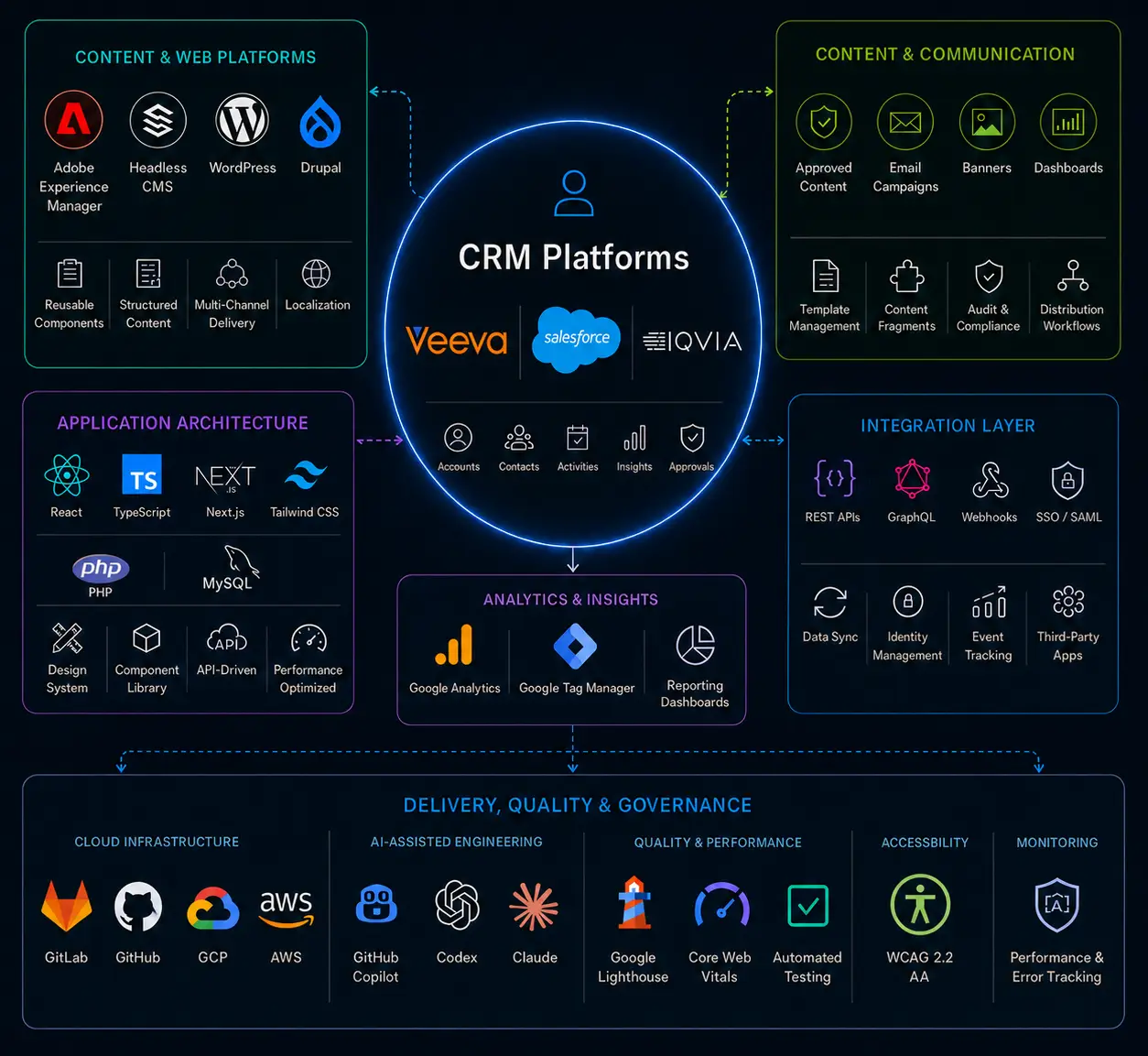
Image description
The image represents a high-level healthcare delivery architecture. It connects public web platforms, enterprise integrations, governed content workflows, reusable frontend systems, QA, release operations, and distributed engineering processes.
A regulated healthcare delivery architecture connecting product platforms, enterprise systems, content operations, QA, and release workflows.
Technical Ownership
Hands-on leadership across architecture, implementation, and delivery.
My role was not limited to building individual screens. I worked as the technical layer between product, design, QA, engineering, and stakeholders — turning ambiguous business goals into clear frontend architecture, implementation plans, review standards, and release paths.
I stayed hands-on while leading the process: writing production code, reviewing engineers’ work, mentoring developers, coordinating offshore teams, clarifying technical trade-offs for designers, and helping QA focus on the areas most likely to create delivery risk.
Operating model
Technical leadA practical bridge between strategy, code, team execution, and production release.
Architecture
From requirements to buildable systems
Defined frontend structure, component boundaries, implementation patterns, and technical trade-offs before work moved too far into production.
Execution
Hands-on code and delivery ownership
Built critical paths, reviewed pull requests, improved implementation quality, and kept engineering work aligned with release timelines and stakeholder expectations.
Team process
Design, QA, offshore, and stakeholder alignment
Created shared understanding across teams, documented standards, mentored engineers, and helped non-engineering partners make better technical decisions earlier.
Healthcare Web Platforms
Public-facing healthcare platforms built for content, performance, and scale.
I worked across healthcare and pharma web platforms built on systems like WordPress, headless CMS architectures, Contentful, Adobe Experience Manager, and custom frontend stacks. The work included new platform builds, migrations from older systems, CMS-driven page templates, and modernization of legacy frontend patterns.
My focus was turning regulated web delivery into a maintainable platform layer: reusable components, structured content models, design tokens, scalable page templates, technical SEO architecture, Lighthouse and performance improvements, analytics integration, accessibility implementation, and cleaner design-to-development workflows.
Web platform engineering
- Built and maintained public healthcare websites across traditional CMS, headless CMS, and custom frontend architectures.
- Worked with WordPress, Contentful, Adobe Experience Manager-style enterprise CMS workflows, and structured content models for scalable page production.
- Modernized older frontend systems by moving repeated UI patterns into reusable components, design tokens, and cleaner implementation standards.
- Updated legacy styling approaches, including migrations from Bootstrap-style UI patterns toward Tailwind-based component systems and more consistent responsive behavior.
- Implemented technical SEO foundations: semantic page structure, metadata patterns, heading hierarchy, crawlable content, internal linking, structured templates, and performance-aware delivery.
- Improved quality through Lighthouse audits, Core Web Vitals awareness, responsive QA, accessibility checks, analytics hooks, and release-ready frontend validation.
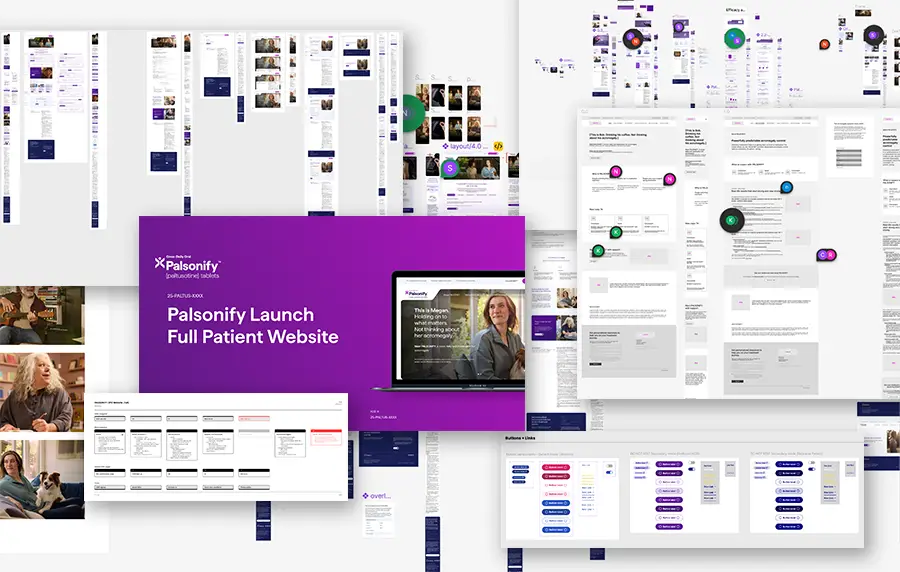
Image description
The screenshots show Figma design files for healthcare web platforms, including reusable UI components, page sections, responsive layout patterns, content modules, and design-system structure. They demonstrate how design decisions were organized before implementation so engineering could build consistent, accessible, and scalable public-facing healthcare websites
Figma design-system screens showing healthcare web components, reusable layouts, and complex page patterns.
Enterprise Platform Integration
CRM, content, and field enablement systems connected through frontend architecture.
I worked with enterprise healthcare platforms where frontend applications had to operate inside larger business systems: CRM workflows, content approval platforms, field enablement tools, approved content distribution, analytics, and release processes. Veeva and Salesforce were key examples, alongside other life-sciences platform environments.
The work was not just building interfaces. It required understanding platform rules, content lifecycle requirements, runtime constraints, data/context handoff, package structure, and how field teams actually used the tools after deployment.
Integration engineering
- Built frontend systems around CRM-aware workflows, including user context, presentation flows, approved follow-up paths, and field-team usage patterns.
- Worked with Veeva / Salesforce ecosystems including CLM, CRM, Vault / PromoMats-style review workflows, approved content structure, and deployment constraints.
- Created reusable HTML5 / JavaScript architectures for platform-delivered experiences, including shared navigation, state conventions, asset packaging, and runtime behavior.
- Handled device and environment constraints such as iPad behavior, offline usage, asset limits, platform APIs, and QA paths specific to enterprise field tools.
- Defined implementation standards for designers, engineers, QA, and offshore teams so platform work could be built and updated consistently across multiple brands and programs.
Integration model
Enterprise platformsFrontend systems mapped to CRM context, governed content, runtime constraints, and field-team workflows.
CRM context
Field-team workflows, user context, presentation state, approved follow-up paths, and interaction patterns connected to platform behavior.
Content lifecycle
Approved content structure, Vault / PromoMats-style review readiness, publishing rules, synchronization expectations, and release validation.
Runtime architecture
HTML5 packaging, JavaScript APIs, shared modules, asset constraints, offline behavior, device testing, and platform-specific QA.
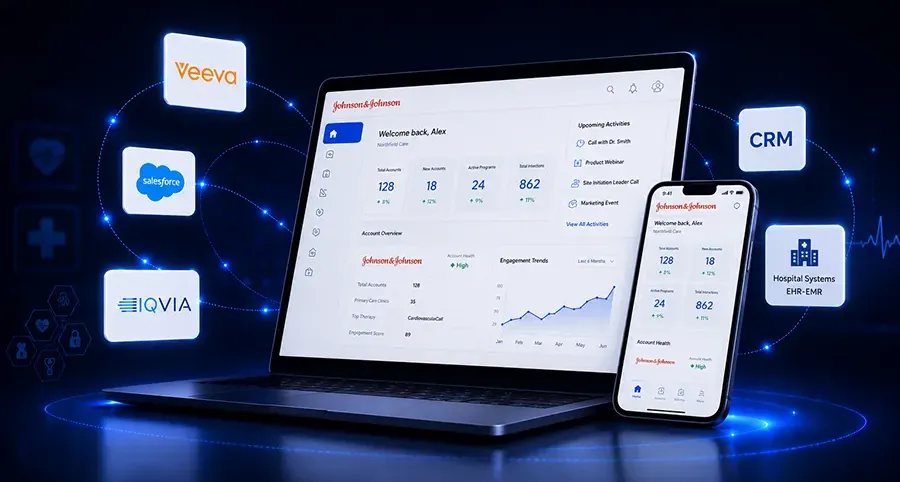
Image description
The diagram shows an enterprise integration model for healthcare and life-sciences platforms. It connects CRM platforms, approved content workflows, platform APIs, runtime behavior, field enablement tools, analytics, identity, data sync, and QA paths. It highlights how frontend systems operate inside broader business platforms such as Veeva, Salesforce, and other CRM or content ecosystems.
Enterprise platform integration model connecting CRM context, governed content, APIs, runtime constraints, and field enablement workflows.
Platform Modernization
Recovering inherited systems and turning them back into maintainable codebases.
I worked on healthcare and pharma platforms that had passed through multiple vendors, frameworks, and delivery teams. Some systems had incomplete source history, unclear dependencies, compiled React output, fragmented documentation, and production behavior that had to be understood before changes could be made safely.
My role was to rebuild technical confidence: inspect generated output, map runtime behavior, reconstruct dependencies, document system behavior, improve GitLab CI/CD workflows, and define whether each inherited asset needed a safe patch, a targeted refactor, or a full rebuild.
Modernization engineering
- Analyzed compiled React applications when original source code, architecture notes, or vendor context were incomplete.
- Mapped generated DOM structure, asset loading, event flows, runtime behavior, hidden dependencies, and platform-specific constraints.
- Created technical documentation and rebuild plans so engineering, QA, and stakeholders could understand risk before committing to changes.
- Improved GitLab CI/CD workflows, release paths, handoff practices, and validation steps for inherited systems that needed safer delivery.
- Used AI-assisted engineering workflows for code analysis, prompt-driven documentation, template normalization, and modernization planning.
- Modernized governed content templates as part of broader platform cleanup, reducing brittle markup and improving maintainability without making template work the center of the engineering story.
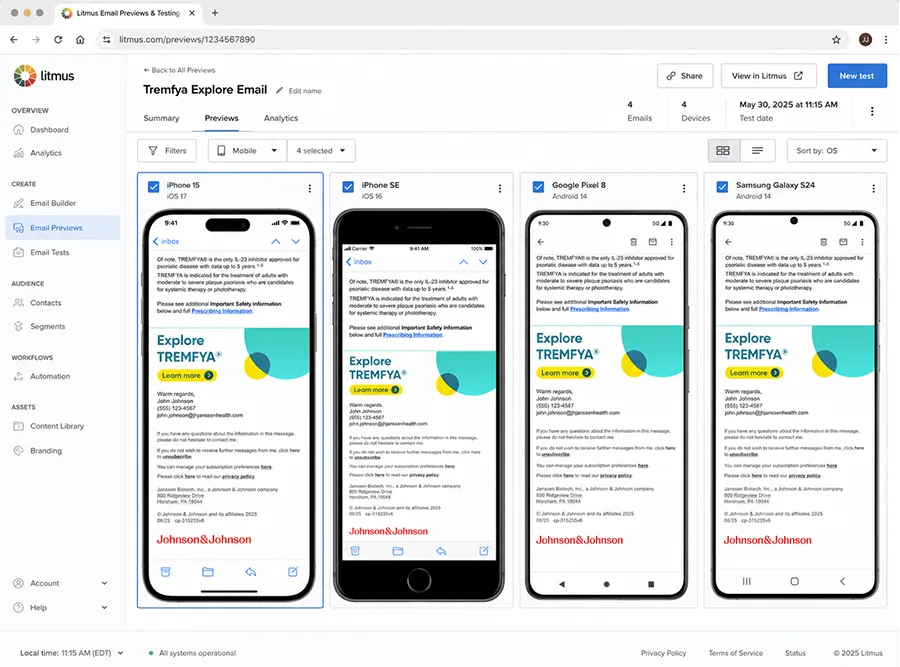
Image description
The screenshots show Litmus testing for Johnson & Johnson email campaigns, highlighting the complexity of regulated HTML email delivery across clients, devices, and rendering environments. They demonstrate review of layout consistency, content density, table-based markup behavior, responsive constraints, and QA validation needed before approved campaign assets could be released.
Litmus testing screenshots for Johnson & Johnson HTML email campaigns across clients and devices.
Engineering value
Healthcare was the domain. The work was architecture, modernization, and team execution.
This experience reflects the operating model I bring to complex product teams: hands-on technical leadership, reusable frontend systems, enterprise platform integration, delivery process improvement, and practical modernization of inherited systems.